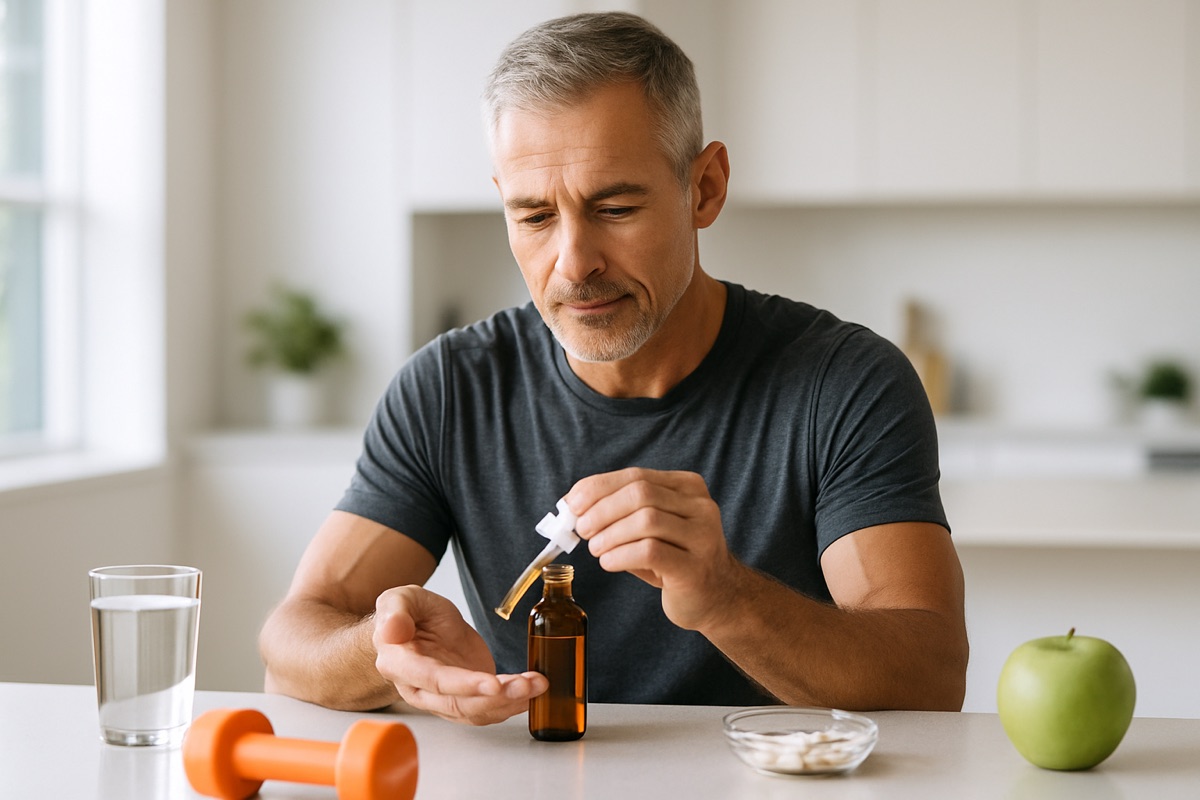
Walk into any serious gym, biohacker forum, or longevity podcast comment section in 2026 and you'll hear the same shopping list: BPC-157 for the tweaked shoulder, TB-500 to "heal everything," a GLP-1 for the last five pounds, CJC-1295/Ipamorelin to chase the growth hormone of your twenties. Peptides have gone from obscure to mainstream faster than the evidence has kept up. Some of these compounds are genuinely transformative and backed by large human trials. Others are supported by a handful of rat studies and a lot of confident anecdotes from people selling them. This piece sorts one from the other — no hype, no fear-mongering, just what the science actually shows and what it doesn't.
One disclaimer up front: this is educational content, not medical advice. Nothing here is a recommendation to buy, inject, or take anything. Peptides sit in a messy regulatory zone, and several of the popular ones are not approved for human use at all. Talk to a clinician who knows your labs before you do anything.
What peptides actually are
A peptide is just a short chain of amino acids — the same building blocks as protein, only smaller. Your body already runs on them: insulin is a peptide, so is glucagon, so are dozens of signaling molecules that tell tissues to grow, repair, or burn fuel. The therapeutic idea is simple: introduce a peptide that mimics or amplifies one of these signals and you nudge a specific biological pathway.
That framing matters because "peptide" is not a category of safety or efficacy — it's a category of chemistry. Semaglutide and BPC-157 are both peptides in the same way that a Boeing 787 and a paper airplane are both aircraft. The right question is never "are peptides good?" It's "what does the human evidence say about this specific peptide at this dose for this outcome?" Most peptides are injected because the digestive tract breaks amino-acid chains down before they reach the bloodstream — which is also why most "oral peptide" supplements, collagen being a partial exception, don't do what the label implies.
GLP-1 agonists: the ones with real trial evidence
If you want the peptide class with the strongest human data by a wide margin, it's the GLP-1 receptor agonists — semaglutide (Ozempic, Wegovy) and the dual GIP/GLP-1 agonist tirzepatide (Mounjaro, Zepbound). These aren't gray-market research chemicals; they're FDA-approved drugs tested in tens of thousands of people.
The mechanism is well characterized: they slow gastric emptying, act on hypothalamic appetite centers to blunt hunger, and enhance glucose-dependent insulin secretion. The body-composition results are real. In the STEP trials, semaglutide 2.4 mg produced roughly 15% mean body-weight loss over 68 weeks. Tirzepatide in SURMOUNT-1 pushed that to around 20–22% at the highest dose — numbers that used to require surgery.
The caveats the gym crowd underweights:
- A meaningful fraction of the weight lost is lean mass — often 25–40% of total loss unless you resistance-train hard and keep protein high. For someone optimizing performance and longevity, muscle is not a rounding error.
- Common side effects are gastrointestinal (nausea, constipation), and there are boxed warnings around thyroid C-cell tumors (from rodent data) and pancreatitis risk.
- Off-label use for the "last five pounds" in a lean, healthy person is a different risk-benefit calculation than treating obesity or type 2 diabetes, and rebound weight gain after stopping is well documented.
Bottom line: powerful, evidence-rich, and legitimately useful for the right person — but not a free lunch, and worth doing under medical supervision with lean mass and metabolic markers tracked.
Collagen peptides: the boring one that actually works
Collagen hydrolysate is the other peptide with a genuine human evidence base, and it's the one nobody posts about because it's undramatic and available at the grocery store. Because it's enzymatically broken into small di- and tri-peptides (notably prolyl-hydroxyproline), a fraction survives digestion and appears in the bloodstream — one of the few "oral peptides" with real absorption data.
Randomized trials support modest but real benefits:
- Skin: meta-analyses of RCTs show improvements in skin elasticity and hydration at roughly 2.5–10 g/day over 8–12 weeks.
- Joints and tendons: studies using ~15 g collagen with vitamin C taken about an hour before loading (the Baar lab protocol) suggest improved collagen synthesis; several trials report reduced activity-related joint pain.
Keep expectations calibrated: collagen is not a complete protein and shouldn't replace your total protein target for muscle — whey or a balanced diet wins there. But for connective-tissue support and skin, it's a low-risk, evidence-backed, legal option. Which is exactly why it gets less hype than the exotic injectables.
BPC-157 and TB-500: big claims, mostly animal data
Here's where the evidence cliff is steep. BPC-157 ("Body Protection Compound") and TB-500 (a synthetic fragment of thymosin beta-4) are the darlings of the recovery-and-repair crowd, marketed for tendon healing, gut repair, and injury recovery. The mechanistic stories are plausible — BPC-157 appears to promote angiogenesis and fibroblast activity in animal models; thymosin beta-4 is involved in actin regulation and tissue repair.
The problem: the overwhelming majority of that evidence is in rats and cell cultures. Rigorous, published, controlled human trials for the injury outcomes people buy these for are essentially absent. Animal healing data does not reliably translate to humans at comparable doses, and "it worked for my elbow" is an anecdote confounded by rest, time, and every other thing you changed.
The regulatory and safety picture is the part enthusiasts skip:
- BPC-157 is not an approved drug and is not a legal dietary supplement in the US — the FDA moved it into a category effectively barring it from compounding. Most product sold is labeled "research use only, not for human consumption."
- That means no manufacturing oversight. Gray-market vials have been found with wrong dosing, contaminants, or the wrong compound entirely. You are trusting an anonymous supplier with a needle.
- Both are prohibited by WADA — a career-ending problem for any tested athlete.
- Long-term human safety data essentially doesn't exist. "No reported side effects" mostly means "nobody has run the studies."
None of this proves they don't work. It means the honest status is "biologically interesting, unproven in humans, legally and pharmaceutically unregulated." Treat anyone who states their benefits as settled fact with skepticism.
Growth-hormone secretagogues: CJC-1295, Ipamorelin, MK-677
These compounds don't supply growth hormone directly; they prod your pituitary to release more of its own. CJC-1295 is a GHRH analog, Ipamorelin is a selective ghrelin-receptor agonist (a GH secretagogue), and MK-677 (ibutamoren) is an orally active secretagogue. Stacks like CJC-1295/Ipamorelin are pitched for recovery, fat loss, sleep, and "anti-aging."
What's actually established: these compounds do raise GH and IGF-1 levels — that pharmacology is real and measurable. MK-677 has the most human data and reliably increases IGF-1 and can increase lean mass and, notably, appetite. What is not established is that chronically elevating GH/IGF-1 in an otherwise healthy adult makes you healthier or longer-lived.
In fact, the longevity literature cuts the other way. Lower IGF-1 signaling is associated with longer lifespan across multiple species, and some human centenarian studies point in the same direction. Higher IGF-1 has associations with certain cancer risks. So the "anti-aging" branding on GH secretagogues sits in direct tension with a fair reading of the aging science. Practical concerns: MK-677 commonly causes water retention, increased appetite, insulin resistance, and elevated fasting glucose. These are also non-approved for anti-aging use and WADA-prohibited.
Creatine: the "peptide-adjacent" benchmark for what good evidence looks like
Creatine isn't a peptide, but it belongs here as a reference point — because it's what a supplement with overwhelming evidence actually looks like. Hundreds of human RCTs, decades of safety data, a clear mechanism (regenerating ATP via phosphocreatine), and consistent effects on strength and power at 3–5 g/day. Emerging data even suggests cognitive benefits under stress or sleep deprivation. It's cheap, legal, oral, and boring.
Use creatine as your mental benchmark: this is the depth of evidence that should exist before you consider something "proven." Measured against creatine, GLP-1s and collagen hold up; BPC-157, TB-500, and the GH secretagogues clearly do not.
How to tell hype from evidence
A quick field guide you can apply to any peptide claim:
- Human trials or animal data? "Studies show" often means rodent studies. Ask specifically for randomized controlled trials in people.
- Approved drug or "research chemical"? A vial labeled "not for human consumption" tells you the manufacturer takes zero responsibility for what's inside.
- Who's making the claim? The person selling the peptide is not a neutral source. Neither is the influencer they sponsor.
- Mechanism vs. outcome. "It promotes angiogenesis in vitro" is a mechanism. "It healed my Achilles faster than rest would have in a controlled trial" is an outcome. Only the second one matters for your decision.
- Does the longevity logic hold? Chasing maximal GH/IGF-1 while claiming anti-aging benefits is a red flag that the marketing outran the biology.
Track these biomarkers if you experiment
If you're going to try any intervention — ideally with a clinician — the single most valuable thing you can do is measure before and after. Anecdote is where people fool themselves; a dated lab panel is where the truth shows up. Establish a baseline, run the intervention for a defined window, and re-test. Depending on what you're taking, the relevant markers include:
- Metabolic (especially for GLP-1s and MK-677): fasting glucose, fasting insulin, HbA1c, HOMA-IR, and a full lipid panel.
- Body composition: DEXA or a consistent method to separate fat loss from muscle loss — critical on GLP-1s.
- GH/IGF-1 axis (for secretagogues): IGF-1, remembering that "higher" is not automatically "better" for longevity.
- Inflammation and general health: hs-CRP, complete blood count, comprehensive metabolic panel, kidney and liver markers — your safety net if a gray-market vial isn't what it claims.
- Recovery and performance: resting heart rate, HRV, sleep quality, and objective strength or pain metrics for anything sold as a repair aid.
Without this, you're running an experiment with no control and no readout — which is exactly how people convince themselves an inert or harmful compound is working.
Before you inject, swallow, or stack anything, get a baseline. VitalNexa turns your lab results, wearable data, and health history into a clear picture — including your VitalNexa Biological Age™ — so you can see what an intervention actually did to your biology instead of trusting the placebo effect and a supplement company's marketing. Track your biomarkers and biological age before and after, and let the data tell you the truth. Get started free.