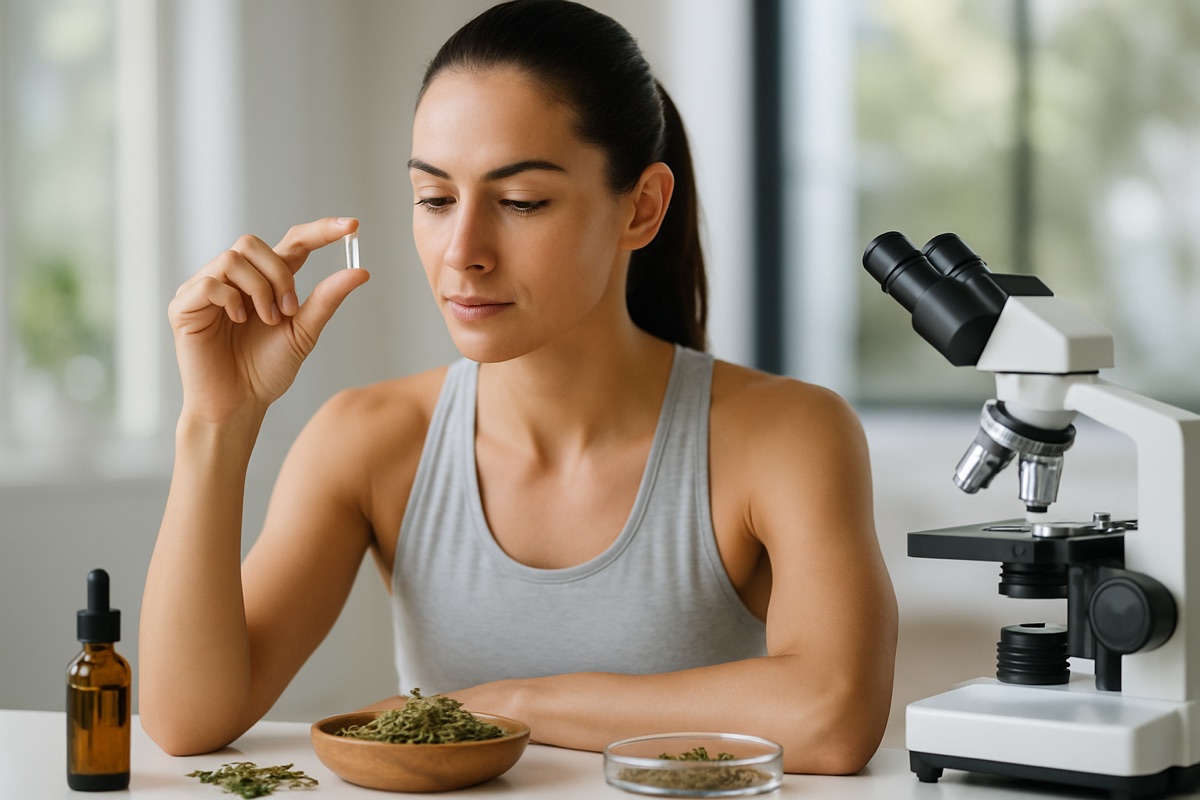
For thousands of years, Ayurvedic practitioners have prescribed herbs like Ashwagandha, Triphala, and Brahmi to promote vitality, mental clarity, and longevity. For most of that time, Western medicine dismissed these remedies as folklore. That is changing rapidly.
Over the past decade, a surge of rigorous clinical trials has put these traditional compounds under the microscope — and many of them are passing the test. The results are not always dramatic, but they are real, reproducible, and increasingly difficult to ignore.
Here are five Ayurvedic herbs that now have meaningful clinical evidence behind them.
1. Ashwagandha (Withania somnifera)
Ashwagandha — KSM-66 Extract
Traditional use: Ashwagandha has been used for over 3,000 years in Ayurveda as a Rasayana — a rejuvenating tonic believed to promote longevity, vitality, and resistance to disease. Its Sanskrit name means "smell of the horse," referring to both its odor and its reputation for conferring the strength of a stallion.
Modern evidence: Ashwagandha is now one of the most-studied adaptogens in the world. KSM-66, a full-spectrum root extract, has been the subject of over 24 gold-standard clinical trials. Key findings include:
- A 2019 RCT in Medicine found that 600mg daily reduced cortisol by 30% and significantly improved stress and anxiety scores over 60 days.
- Multiple trials demonstrate an 11–17% increase in testosterone in healthy men, with parallel improvements in sperm quality.
- A 2021 study in the Journal of Clinical Medicine showed improved sleep quality and onset latency, with effects comparable to low-dose pharmaceutical sleep aids.
- Significant improvements in VO2 max and muscle recovery in resistance-trained athletes (2020, Nutrients).
2. Triphala
Triphala — Three-Fruit Formula
Traditional use: Triphala is a cornerstone of Ayurvedic medicine — a blend of three dried fruits: Amalaki (Emblica officinalis), Bibhitaki (Terminalia bellirica), and Haritaki (Terminalia chebula). It has been prescribed for over 2,000 years as a gentle daily digestive tonic, believed to balance all three doshas and promote internal cleansing.
Modern evidence: Research has validated several of Triphala's traditional claims:
- A 2017 RCT in the Journal of Alternative and Complementary Medicine demonstrated significant improvements in bowel regularity, stool consistency, and reduction in IBS symptoms over 12 weeks.
- Triphala is one of the most potent natural sources of antioxidants, with ORAC values exceeding most common fruits and vegetables.
- A 2019 study in Scientific Reports found that Triphala modulates gut microbiota composition, increasing beneficial Bifidobacteria and Lactobacillus species.
- Anti-inflammatory activity comparable to ibuprofen in vitro, mediated through COX-2 inhibition (2018, PLoS ONE).
3. Tulsi (Holy Basil)
Tulsi — Ocimum tenuiflorum
Traditional use: Tulsi, or Holy Basil, occupies a unique place in Ayurvedic tradition. Revered as "The Queen of Herbs" and considered sacred in Hindu culture, it has been used to promote mental clarity, respiratory health, and spiritual well-being for millennia.
Modern evidence: Clinical research on Tulsi has expanded significantly:
- A 2017 systematic review in Evidence-Based Complementary and Alternative Medicine analyzed 24 human studies and concluded that Tulsi demonstrates significant effects on metabolic stress (normalizing blood glucose, blood pressure, and lipid profiles) and psychological stress (reducing anxiety, depression, and cognitive fatigue).
- A 2016 RCT found that 1,200mg Tulsi extract daily significantly reduced generalized anxiety disorder symptoms, with improvements in stress, sexual function, and sleep.
- Eugenol, the primary active compound, has demonstrated antimicrobial, anti-inflammatory, and immunomodulatory activity in multiple studies.
4. Shilajit
Shilajit — Mineral Pitch Resin
Traditional use: Shilajit is a tar-like substance that seeps from rocks in the Himalayas, formed over centuries from the decomposition of plant material. In Ayurveda, it is described as the "destroyer of weakness" and has been used to enhance vitality, stamina, and cognitive function. It is considered a powerful Rasayana and is often combined with other herbs to enhance their bioavailability.
Modern evidence: Modern analysis reveals that Shilajit contains over 85 minerals in ionic form plus fulvic acid, a potent electron donor:
- A 2019 study in Andrologia found that purified Shilajit (250mg twice daily) increased total testosterone by 20% and free testosterone by 19% in healthy men over 90 days.
- Research published in the Journal of Alzheimer's Disease showed that fulvic acid from Shilajit inhibited tau protein aggregation, a hallmark of Alzheimer's pathology.
- A 2012 study in the Journal of Ethnopharmacology demonstrated that Shilajit enhanced mitochondrial function, increasing CoQ10 levels and improving cellular energy production.
- Significant improvements in exercise performance and recovery in recreational athletes (2016, Journal of the International Society of Sports Nutrition).
5. Brahmi (Bacopa monnieri)
Brahmi — Bacopa monnieri
Traditional use: Brahmi is perhaps the most important Medhya Rasayana (brain tonic) in Ayurveda. For over 3,000 years, it has been prescribed to enhance memory, learning, and concentration. Ayurvedic scholars traditionally gave Brahmi to students to improve their ability to memorize long Vedic texts.
Modern evidence: Brahmi has one of the strongest evidence bases of any natural nootropic:
- A 2014 meta-analysis in the Journal of Ethnopharmacology, pooling data from 9 RCTs with 518 participants, concluded that Bacopa significantly improved attention, cognitive processing speed, and working memory.
- A 12-week RCT in healthy adults over 65 found significant improvements in memory acquisition and retention, with no adverse effects (2010, Psychopharmacology).
- Bacopa's active compounds (bacosides A and B) increase dendritic branching and synaptic activity in the hippocampus, providing a plausible mechanism for its memory-enhancing effects.
- Neuroprotective effects against oxidative stress and beta-amyloid toxicity have been demonstrated in multiple studies, suggesting potential relevance for age-related cognitive decline.
The Best of Both Worlds
The false dichotomy between "ancient wisdom" and "modern science" serves no one. Ayurveda offers thousands of years of observational data about which compounds affect the human body and how. Modern science provides the tools to measure those effects precisely, understand their mechanisms, and identify who benefits most.
The smartest approach is to combine both: use traditional knowledge as a starting point for what to investigate, then apply modern evidence standards to determine what works, at what dose, and for whom.
Traditional medicine asks: "What have people used for thousands of years?" Modern science asks: "Does it actually work, and why?" The best health decisions happen when you listen to both answers.
This is exactly the philosophy behind VitalNexa's supplement datacards. Each card documents both the traditional use and the modern clinical evidence, giving you the complete picture so you can make informed decisions about what to include in your health stack.
Explore Our Ayurvedic Supplement Datacards
Detailed profiles for Ashwagandha, Brahmi, Triphala, and dozens more — with dosage, evidence ratings, and personalized recommendations based on your health data.
Explore Datacards Free →